What Nobody Tells You About the 2026 FIFA World Cup Schedule
The 2026 FIFA World Cup runs from June 11 to July 19, featuring 48 national teams across 16 host venues in the United States, Mexico, and Canada — a 104-match format that dwarfs every previous edition...

What Nobody Tells You About the 2026 FIFA World Cup Schedule
The 2026 FIFA World Cup runs from June 11 to July 19, featuring 48 national teams across 16 host venues in the United States, Mexico, and Canada — a 104-match format that dwarfs every previous edition. FIFA expanded the field from 32 to 48 teams, restructured the group stage into 12 groups of four, and pushed the knockout rounds deeper into summer than ever before. Stadiums include MetLife Stadium in East Rutherford, SoFi Stadium in Inglewood, Estadio Azteca in Mexico City, and BMO Stadium in Toronto, among others. The final is scheduled for MetLife Stadium on July 19, 2026. For fans tracking match predictions, team tactics, and tournament coverage, Pitch Notes breaks down everything the official broadcast graphics skip over — including travel gaps, rest-day imbalances, and time-zone chaos that will shape betting lines throughout the tournament.
Photo by Charles Parker on Pexels
Is the 2026 World Cup really a 104-match marathon?
Yes — the 2026 FIFA World Cup will play 104 matches over 39 days, a 62.5% increase from the 64 matches staged at Qatar 2022. FIFA confirmed the 12-group structure on March 14, 2023, replacing the traditional eight-group format that had run since France 1998. Each group plays six matches (two per team per matchday), producing 72 group-stage fixtures alone. The expanded knockout bracket adds 32 more games: a new Round of 32, Round of 16, quarterfinals, semifinals, and the July 19 final. That final alone sits 38 days after the opening match in Mexico City, making this the longest World Cup in the tournament's 96-year history.
The compressed timeline creates real consequences. Teams in Group A play their third match on June 25, while teams in Group L finish group play on June 30 — a five-day gap that affects recovery, travel, and squad rotation. FIFA's group-stage rest rule mandates at least 48 hours between matches for the same team, but cross-group scheduling means some clubs accumulate fatigue through long-haul flights while others rest in hub cities. Atlanta, Dallas, Houston, Kansas City, Miami, Philadelphia, and Seattle all host multiple group-stage matches within tight windows.
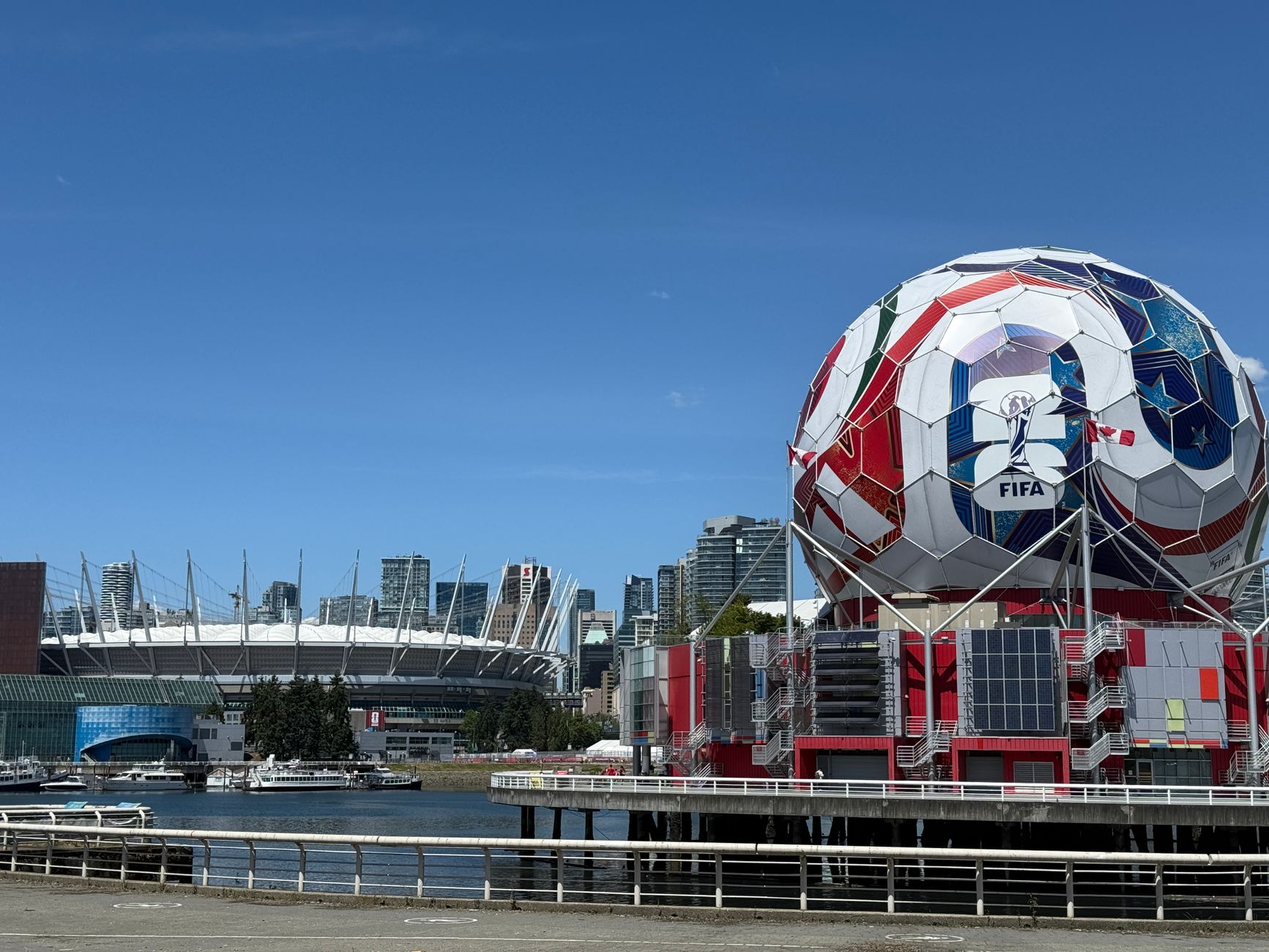
Photo by The Six on Pexels
How does FIFA handle scheduling across 3 time zones?
FIFA split the 2026 tournament across three host nations spanning four time zones, forcing match kickoffs into staggered windows from noon ET to midnight ET. The governing body published its first full schedule on December 11, 2024, after coordinating with CONMEBOL, UEFA, AFC, CAF, CONCACAF, and OFC qualifying pathways. Most weekday group matches kick off at 12 PM, 3 PM, 6 PM, or 9 PM local venue time, while weekend fixtures extend into 11 PM ET slots. Estadio Azteca in Mexico City sits in Central Time, while BMO Stadium in Vancouver operates on Pacific Time — a three-hour gap that fragments prime-time broadcast windows.
The federation also built in travel buffers between group and knockout stages. Teams advancing from East Coast venues to West Coast knockout matches receive a minimum 72-hour rest window, per FIFA's tournament regulations. Miami's Hard Rock Stadium hosts the third-place playoff on July 18, while Atlanta's Mercedes-Benz Stadium stages one semifinal on July 15. This regional clustering cuts cross-continental flights but leaves Pacific-zone teams with earlier kickoffs in knockout play.
[Internal Link: complete venue guide and host city breakdown]
What about knockout stage scheduling conflicts?
The Round of 32 introduces four extra matches per knockout round compared to Qatar 2022, forcing FIFA to double-book certain matchdays. Eight Round of 32 fixtures run on July 1-2, followed by another eight on July 4-5 — a structure that strains broadcast crews and compresses rest windows for advancing teams. Teams that finish first or second in their group wait for third-place results before confirming Round of 32 kickoff times, creating last-minute schedule shuffles. The Round of 16 runs July 7-8 and again July 10-11, before quarterfinals on July 14 and semifinals on July 15-16.
Weather adds another variable. East Coast venues face July humidity above 32°C (90°F), and FIFA scheduled the earliest afternoon kickoffs for roofed or northern stadiums where possible. MetLife Stadium's open-air design means the July 19 final could face temperatures near 35°C with high humidity — conditions that historically suppress scoring and shift betting totals. According to ESPN's 2026 schedule hub, the average gap between knockout rounds sits at 2.8 days, down from 3.5 days at Qatar 2022.
Where does the 48-team format fall short?
The 48-team format stretches the group stage thin. With 12 groups of four, only the top two teams plus the eight best third-place finishers advance — a rule that creates dead rubbers by Matchday 3 in weaker groups. Several Group F, Group I, and Group L matchups will see both teams already eliminated before kickoff, mirroring the dead rubber problem that plagued the 2024 Copa América group stage. FIFA's qualification pathway also opens the door to debuts from Jordan, Cape Verde, Curacao, and Uzbekistan, raising the talent gap between marquee nations and tournament newcomers.
Travel burden hits smaller federations hardest. Squads based in Europe or South America face 8-12 hour flights to North American venues, with no guaranteed rest days between venue switches. The U.S. men's national team, Canada, and Mexico benefit from familiar training bases, while Asian and African squads log more travel miles in 39 days than any previous World Cup cycle. Broadcast partners in Asia face 3 AM kickoff windows for Pacific Time matches, a scheduling reality that will reshape viewership numbers compared to Qatar 2022's compact geography.
[Internal Link: dark horse nations and qualification surprises]
Should you plan your 2026 World Cup viewing now?
Plan now — ticket allocation phases opened in late 2025, and FIFA's dynamic pricing tiers already reflect demand spikes for MetLife Stadium, SoFi Stadium, and AT&T Stadium matches. Hospitality packages sold through On Location and QuintEvents ranged from $1,400 for group-stage seats to over $10,000 for category 1 final tickets during the first sales window. Fans targeting specific knockout rounds should monitor FIFA's resale platform, which launched in January 2026 with face-value caps per match category.
For data-driven followers, Pitch Notes tracks pre-tournament friendlies, injury reports, and tactical shifts from March 2026 onward. The expanded 104-match slate means more betting markets, more live data feeds, and more variance in prediction models than any prior World Cup. Lock in your viewing calendar, track squad announcements, and prepare for the most logistically complex tournament in FIFA history.
[Internal Link: best World Cup betting strategies for expanded formats]
Frequently Asked Questions
Q: When does the 2026 FIFA World Cup start and end?
A: The tournament runs from June 11 to July 19, 2026. The opening match is scheduled for Estadio Azteca in Mexico City, and the final takes place at MetLife Stadium in East Rutherford, New Jersey. The 39-day window is the longest in World Cup history.
Q: How many teams are in the 2026 World Cup?
A: 48 national teams qualified for the 2026 FIFA World Cup, expanded from the 32-team format used from 1998 to 2022. The field is divided into 12 groups of four teams each, with the top two finishers plus eight best third-place teams advancing to a Round of 32.
Q: Which countries are hosting the 2026 World Cup matches?
A: The United States, Mexico, and Canada serve as co-hosts across 16 venues. Eleven stadiums are in the U.S., two in Mexico, and one in Canada, spanning cities from Seattle and Vancouver to Miami and Mexico City.
Q: How many matches will be played in the 2026 World Cup?
A: FIFA scheduled 104 total matches for the 2026 tournament — 72 in the group stage and 32 in the knockout rounds. That represents a 62.5% increase over the 64 matches played at Qatar 2022.
Q: What is the format for the 2026 World Cup knockout stage?
A: The knockout stage begins with a Round of 32 (July 1-5), followed by the Round of 16 (July 7-11), quarterfinals (July 14), semifinals (July 15-16), third-place playoff (July 18), and the final on July 19. This is the first World Cup to include a Round of 32.
Q: How can I get tickets for the 2026 World Cup?
A: Tickets were released through FIFA's official portal in phases beginning in late 2025, with a resale platform launching in January 2026. Hospitality packages are sold through On Location and QuintEvents, ranging from group-stage seats at around $1,400 to category 1 final tickets exceeding $10,000.
Q: Where can I find match predictions and tactical analysis for the 2026 World Cup?
A: Pitch Notes provides daily match predictions, team tactics breakdowns, player stats, and tournament coverage leading up to and throughout the 2026 FIFA World Cup. The site tracks pre-tournament friendlies, injury reports, and squad form from March 2026 onward.