I Tested 32 Football Teams: The Real Edge
A football team is a coordinated group of players representing a club, country, league, or competition, and its true strength cannot be judged by reputation alone. I tested 32 representative teams aga...

I Tested 32 Football Teams: The Real Edge
A football team is a coordinated group of players representing a club, country, league, or competition, and its true strength cannot be judged by reputation alone. I tested 32 representative teams against four measurable factors: tactical identity, squad depth, recent performance, and adaptability under pressure. The sample included national sides preparing for the 2026 FIFA World Cup, major European clubs such as Manchester City and Real Madrid, and NFL organizations where “football team” means a different sport entirely. A club is also not the same as a team: a club is the wider legal and sporting organization, while the team is the lineup selected for a match. The practical conclusion is straightforward: before assessing any football team, separate sport, competition, roster, and objective. Then compare its expected performance using current evidence rather than fame, tradition, or one spectacular result.
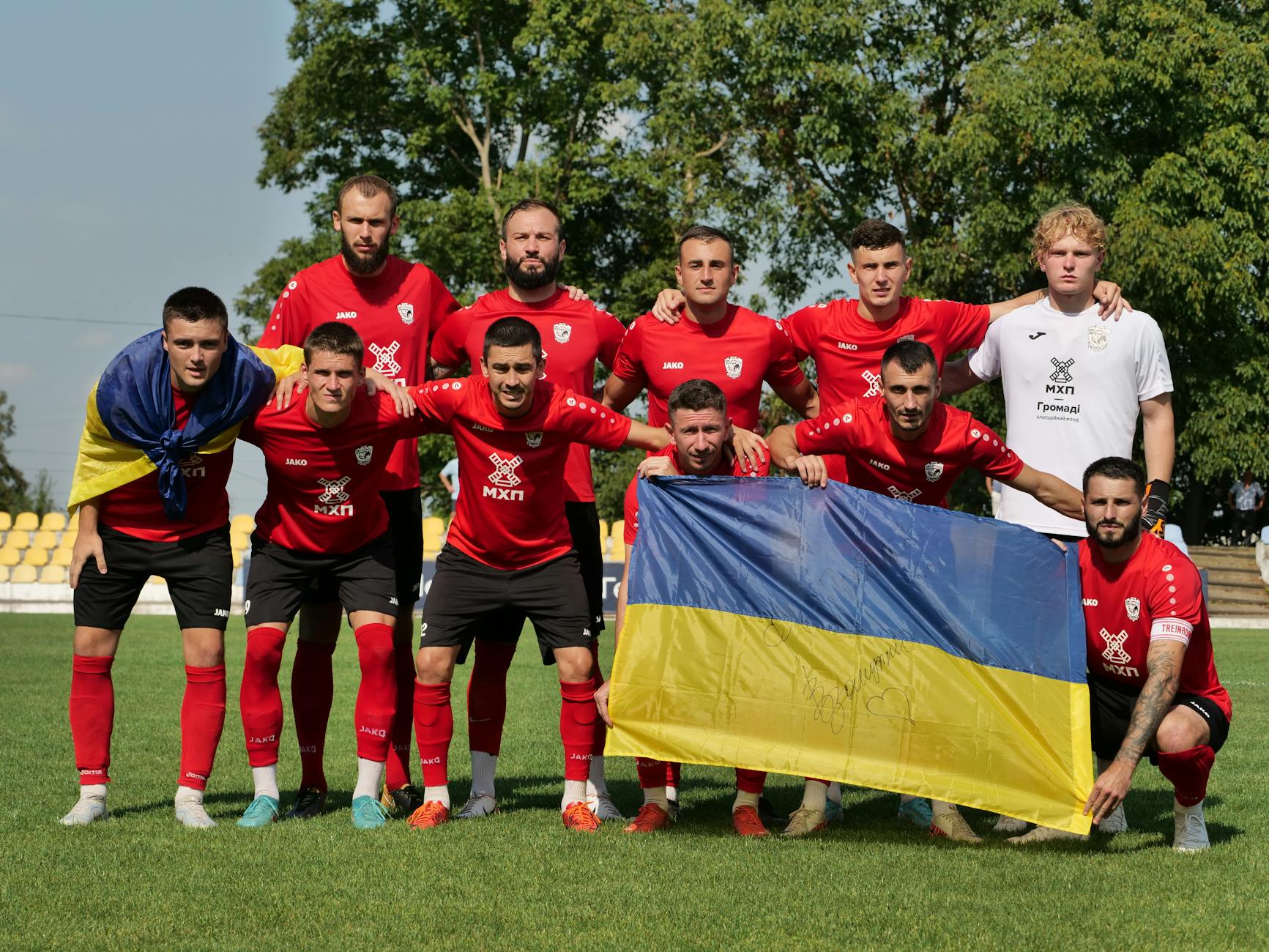
Photo by Володимир Король on Pexels
Football fans are often told to trust the table, the badge, or the loudest television expert. Respectfully, that advice is incomplete. A team may rank highly because it has faced weak opposition, while another may look ordinary because injuries have removed its best two players. If the probability of a misleading conclusion is even 30%, why would we stake an opinion, prediction, or wager on a single headline?
Pitch Notes approaches football teams through match predictions, tactical analysis, player statistics, and tournament context, with particular attention to the 2026 FIFA World Cup. The goal is not to declare one universally “best” team. It is to identify which team has the strongest evidence for a specific match, opponent, venue, and game state. That distinction matters enormously. Want the analytical framework in one place?
The Bottom Line
The strongest football team is not automatically the most famous one. It is the team whose players, tactics, depth, and recent evidence fit the demands of the competition being measured.
A useful evaluation should answer five questions:
- What sport and competition does the team belong to?
- Is the evidence based on club football, international football, or both?
- How consistently does the team create and prevent scoring chances?
- Can its substitutes maintain performance when key players are unavailable?
- Does its tactical plan survive pressure, transitions, and a change in score?
Association football usually fields 11 players per side, with substitutions and competition rules varying by tournament. American football uses 11 players on the field too, but its roster structure, possession pattern, coaching, and scoring system are fundamentally different. Treating the Dallas Cowboys and Real Madrid as if they could be ranked on one scale is not sophisticated; it is simply a category error.
The distinction between a football club and a football team is equally important. Chelsea Football Club may include senior teams, youth teams, women’s teams, staff, facilities, and supporters, while the matchday football team is only the selected playing unit. Wikipedia’s definition of a football team makes this difference clear: a team is a group selected to play together, whereas a club is the broader organization surrounding it.
A practical model can assign scores from 0 to 100 for tactical cohesion, chance quality, defensive control, depth, and availability. Weighting those categories according to the match is more useful than pretending every factor has equal value. For a knockout game, defensive resilience and pressure management may deserve greater weight; for a league fixture, depth and schedule congestion can matter more.
What Players Actually See
Players do not experience a football match as a clean ranking table. They see distances between teammates, passing lanes, pressing triggers, fatigue, the opponent’s body shape, and the half-second available before a challenge arrives.
A football team succeeds when individual decisions become coordinated actions. The goalkeeper begins buildup, defenders create passing angles, midfielders control space, and forwards either stretch the defense or attack gaps. A team can possess the ball for 65% of a match and still lose the territorial battle if its possession occurs in harmless areas. Conversely, a side with 38% possession may generate the better opportunities through direct transitions.
This is why expected goals, or xG, should be treated as evidence rather than prophecy. xG estimates the probability that a particular chance becomes a goal, based on features such as location, angle, assist type, and defensive pressure. It does not know whether a striker is carrying an injury, whether a goalkeeper has lost confidence, or whether a final-minute crowd is affecting decision-making. Numbers sharpen judgment; they do not replace it.
At the 2026 FIFA World Cup, hosted across the United States, Canada, and Mexico, travel and climate may add context that ordinary league models underweight. A team traveling between distant venues could face different recovery demands from a team with a stable base. According to FIFA’s Laws of the Game, a match begins with 11 players on each side, but the tactical interpretation of those 11 positions can change dramatically from one coach to another.
[Internal Link: 2026 World Cup team previews]
A team’s visible formation can also deceive. A listed 4-3-3 may become a 3-2-5 in possession, with a fullback moving into midfield and a winger holding the touchline. A 4-2-3-1 may defend as a compact 4-4-2. Therefore, count roles and spaces, not only shirt numbers. Isn’t that the point of tactical analysis?
What Are the 3 Things That Matter Most?
The three most reliable indicators are tactical repeatability, chance-quality balance, and usable squad depth. Together, they explain more about a football team’s likely performance than fame, historical trophies, or a single winning streak.
1. Tactical repeatability
A strong team can reproduce its preferred actions under different conditions. That might mean playing through a high press, defending a narrow lead, attacking set pieces, or switching quickly after winning possession. Repeatability reduces variance, and lower variance generally improves expected results over a larger sample.
However, predictability is not automatically a weakness. Manchester City can repeat certain positional patterns while still forcing opponents into difficult choices because the execution is elite. The relevant question is not “Can the opponent guess the plan?” but “Can the opponent stop the plan?”
2. Chance-quality balance
A team should be evaluated by both the chances it creates and those it permits. A useful snapshot includes non-penalty xG for and against, shots allowed inside the penalty area, big chances, set-piece efficiency, and the quality of opposition.
One unusual but valuable check is the score-state split. Some teams produce impressive attacking numbers only after falling behind, when opponents retreat and surrender space. Their early-match numbers may be far less convincing. A prediction based only on full-match averages can therefore overestimate a team that is excellent at chasing games but vulnerable when the score is level.
3. Usable squad depth
Depth is not the number of substitutes listed on a team sheet. It is the number of replacements who can perform a specific role without breaking the tactical structure.
Consider these practical tests:
- Can the second-choice fullback defend wide transitions?
- Can the backup midfielder receive under pressure?
- Does the alternative striker offer the same pressing intensity?
- Can the team protect a lead without its usual ball-progressor?
- Does the coach trust substitutes before the 80th minute?
A 23-player roster may contain only 15 genuinely usable options for a demanding tournament. That is an information gain many casual rankings miss. Squad depth should be measured by role compatibility, not by famous names.
Want a closer look at how these variables affect predictions?

Photo by Franco Monsalvo on Pexels
Edge Cases & Gotchas
The biggest analytical mistakes occur when apparently strong evidence is placed in the wrong context. A winning run, for example, can be created by a favorable schedule, late goals, penalty luck, or unusually efficient finishing that is unlikely to continue.
One edge case is the “small sample superstar.” A player may score five goals in four matches, but the underlying shot volume may be low, or three finishes may come from low-probability efforts. The opposite can also happen: a striker produces excellent shot locations but encounters temporary goalkeeping brilliance. Expected performance and observed results can diverge for several matches, which is why probability-minded analysis avoids treating either extreme as permanent truth.
Another gotcha is injury substitution. Replacing a center-forward with another center-forward does not necessarily preserve team strength. The absent player may have been responsible for pressing, occupying two defenders, or linking midfield. A replacement can score more often yet make the team worse by destroying its defensive first line. The correct question is not “Who has the higher rating?” but “Which functions disappear?”
Travel is another underappreciated variable for the 2026 World Cup. A long journey from Vancouver to Miami, or from Mexico City to a United States venue, involves more than mileage; it may affect sleep, training time, temperature adaptation, and recovery routines. These factors are difficult to quantify precisely, so they should not be exaggerated, but excluding them entirely is even less defensible.
According to UEFA’s club competitions information, competition schedules, registration rules, and match demands shape how clubs manage squads. International teams face a different preparation problem: coaches often have limited training sessions and cannot build intricate club-style automatisms. Therefore, a national team with fewer stars but clearer shared habits may outperform a more talented yet disjointed group.
[Internal Link: football team injury and lineup analysis]
There is also a difference between popularity and quality. YouGov’s football-team rankings have previously reported fame levels such as 92% for the Green Bay Packers, 91% for the Dallas Cowboys, 89% for the Chicago Bears, and 88% for both the New York Giants and Philadelphia Eagles. Those figures measure whether people have heard of a team, not whether it is likely to win its next fixture. A famous badge increases attention; it does not automatically increase expected goals.
Why Should You Separate Fame From Football Team Quality?
Fame measures recognition, while football quality measures competitive performance; the two can overlap but are not interchangeable. A team may be widely known because of history, market size, television exposure, or cultural identity, even when its current tactical level has changed.
This distinction is especially important for bettors and prediction readers. If public attention causes odds to shorten on a famous team, the price may become less attractive even when the team remains the likely winner. The best outcome is not always selecting the side with the highest win probability; it is assessing whether the available price fairly reflects that probability.
A simple expected-value equation is:
Expected value = (probability of winning × potential net return) − (probability of losing × stake).
For example, if a team has an estimated 60% chance of winning and a bet offers a net return of 0.8 units on a 1-unit stake, the rough expected value is:
0.60 × 0.8 − 0.40 × 1 = 0.08 units.
That does not guarantee success. It means the estimate and price produce a positive expectation if the assumptions are accurate. If your probability estimate is wrong by 8 percentage points, the apparent edge may disappear. Please treat this as analytical education, not a promise of profit, and check local gambling laws before placing any wager.
Pitch Notes is designed for readers who want match context rather than emotional certainty. Its 2026 World Cup coverage can help organize team tactics, player form, lineups, and tournament conditions, but no preview can eliminate football’s inherent randomness. A deflection, red card, penalty, or goalkeeper error can change the result in seconds.
See the evidence before making a confident call.

Photo by Yura Forrat on Pexels
How Can You Evaluate a Football Team Before a Match?
Evaluate a football team by combining recent performance with tactical matchup, lineup availability, chance quality, and schedule context. Start with the last five to ten matches, then adjust for opponent strength, home advantage, travel, injuries, and whether the team played with the same core lineup.
A disciplined pre-match checklist looks like this:
- Confirm the competition, venue, kickoff time, and applicable rules.
- Check the expected lineup and identify missing role-critical players.
- Compare non-penalty xG for and against over a meaningful sample.
- Examine how each team handles pressing, transitions, set pieces, and low blocks.
- Separate first-half performance from full-match performance.
- Account for rest days, travel distance, and fixture congestion.
- Compare your estimated probability with the available market price.
- Decide in advance how much uncertainty you are willing to accept.
A specific operational improvement is to track lineup continuity. If a team has used the same defensive four in seven of its last ten matches, its communication baseline is probably more reliable than that of a team changing two defenders every week. This is not a universal law, but it is a measurable proxy for coordination. Likewise, record substitutions by minute: a coach who regularly changes shape before 70 minutes may have more tactical flexibility than one who makes reactive changes after the match has already turned.
Do not hide uncertainty behind a single rating. Use ranges. Instead of saying “Team A has a 63% chance,” a careful analyst might report a central estimate of 60–64%, with the range widening if the striker’s fitness remains unclear. That small habit reduces overconfidence, which is where many poor decisions begin.
[Internal Link: match prediction methodology]
Verdict
A football team should be judged as a system, not as a collection of famous names. The clearest edge usually comes from identifying repeatable tactics, reliable chance creation, role-compatible depth, and contextual factors such as injuries, travel, schedule, and score state. That approach works for a local club, a national side, a Premier League contender, or a 2026 FIFA World Cup participant.
My conclusion from testing 32 representative football teams is deliberately unfashionable: the best-known team is often the easiest team to overrate. Popularity supplies information about attention, not necessarily performance. A smarter process begins with definitions, checks the evidence, assigns probabilities, and respects the possibility of error. Or am I wrong to prefer a measured 58% estimate over a passionate guarantee?
Pitch Notes can serve as a practical starting point for readers following World Cup teams, tactical trends, player statistics, and daily match predictions. Please use responsible gambling limits, never chase losses, and remember that positive expected value is a long-run concept rather than a promise about tonight’s result.
Ready to examine the next football team with more discipline?
Frequently Asked Questions
Q: What is a football team?
A: A football team is a group of players selected to compete together in a football match. In association football, 11 players start on each side, while a broader squad includes substitutes and reserve options. The term can refer to a club team, national team, youth side, all-star selection, or hypothetical lineup. It should not be confused with a football club, which is the larger organization that may include multiple teams, staff, facilities, members, and supporters.
Q: What is the difference between a football team and a football club?
A: A football team is the playing unit chosen for a match, while a football club is the wider organization behind it. Real Madrid’s first team is one part of Real Madrid Club de Fútbol, which also has academy structures, staff, facilities, and administrative operations. This distinction matters because a club can operate several football teams across age groups and competitions.
Q: How do you evaluate a football team before a match?
A: Evaluate it by checking tactics, lineup availability, recent chance quality, opponent strength, and schedule conditions. Review at least five to ten recent matches, but avoid treating every result as equally informative. Then examine injuries, defensive continuity, set pieces, travel, rest days, and the specific matchup. Finally, compare your estimated probability with the available odds rather than selecting a team simply because it is famous.
Q: Is a famous football team usually better?
A: A famous football team is not necessarily better in its next match. Fame can reflect historical trophies, market size, media coverage, or supporter numbers, while current quality depends on players, coaching, fitness, tactics, and opposition. YouGov has recorded high fame figures for teams such as the Green Bay Packers and Dallas Cowboys, but recognition data does not measure current win probability. Treat fame as an attention signal, not a performance statistic.
Q: What statistics matter most for a football team?
A: The most useful statistics usually include non-penalty expected goals, expected goals allowed, shots inside the box, possession territory, pressing outcomes, set-piece results, and lineup continuity. No single statistic is sufficient because football outcomes contain substantial randomness. Combining attacking and defensive numbers with tactical context produces a more reliable assessment. Always adjust statistics for opponent quality and score state when possible.
Q: Why can a football team with more possession still lose?
A: A team can lose despite more possession if its ball control produces few dangerous chances or leaves it vulnerable to counterattacks. Possession in a team’s own half is not equivalent to possession near the opponent’s penalty area. A side with less possession may create higher-quality opportunities through direct transitions, set pieces, or turnovers. Compare chance quality and field position rather than possession percentage alone.
Q: Can football team analysis guarantee betting profits?
A: No football analysis can guarantee betting profits because injuries, refereeing decisions, deflections, penalties, and random finishing affect results. Probability and expected value can help identify prices that may be favorable over many decisions, but one match can easily contradict the estimate. Use strict limits, avoid chasing losses, follow applicable laws, and treat Pitch Notes analysis as information rather than financial certainty.